

Warmth doesn’t have to mean a bulky layer. A plus size fleece zip pullover can help retain body heat while feeling lightweight and breathable. Fleece can resist some moisture, but it isn’t waterproof, so it’s better suited to cool, dry comfort than heavy rain.
That balance makes fleece appealing for everyday wear: it feels cozy without the weight of some thicker layers. Fit matters, too. Measurements, fabric weight, and room to move all affect how comfortable a pullover feels over a T-shirt or another layer.
Use fabric weight, fit measurements, breathability, and zipper style to narrow your choice. Compare full-zip and mock-neck details, too, to find a style that suits your routine.
Key Takeaways
- Choose between pullover, full-zip, quarter-zip, and mock-neck designs based on how you want to layer and adjust coverage.
- Use fleece weight and thickness to balance warmth with the lighter feel you want for everyday wear.
- Compare garment measurements with a layer you already find comfortable, paying attention to room through the chest, sleeves, and hem.
- Fleece can breathe and resist moisture, but it isn’t waterproof, so consider the conditions you’ll wear it in.
Pullover, full-zip, quarter-zip, and mock-neck options
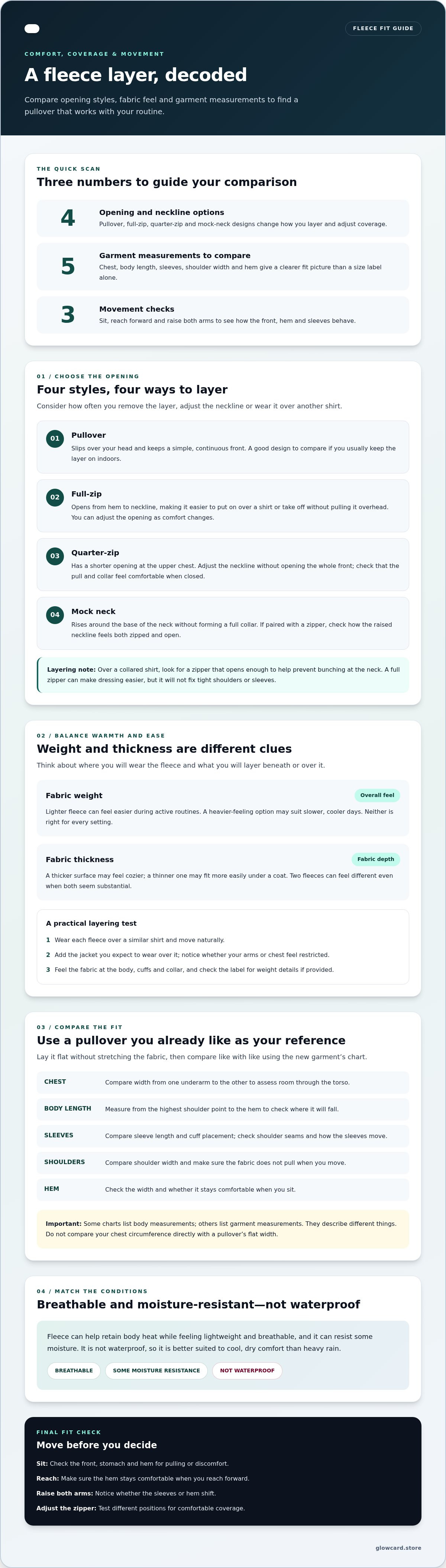
Each opening changes how a fleece layer goes on and adjusts. Compare the neckline, zipper length, and layering routine before choosing.
Pullover and Full-Zip Styles
A pullover slips over your head and has a simple front without a full-length opening. Choose one if you prefer a continuous front and usually keep the layer on indoors. A full-zip opens from hem to neckline, making it easier to put on over a shirt or take off without pulling it overhead. You can also adjust the opening as your comfort changes.
For a plus-size fit, check how the front sits when you stand and sit. If the fabric pulls across your chest or stomach, try a roomier cut or another size. Make sure the hem stays comfortable when you reach forward. A full zipper can make dressing easier, but it won’t fix tight shoulders or sleeves.
Quarter-Zip and Mock-Neck Styles
A quarter-zip has a shorter opening at the upper chest. It offers less access than a full-zip but lets you adjust the neckline without opening the whole front. This can work well over a T-shirt. Check that the zipper pull and collar feel comfortable when closed, especially if you’ll wear the fleece for long stretches.
A mock neck rises around the base of the neck without forming a full collar. Paired with a zipper, it gives the neckline a more covered feel. The 2023 Men's Plus Size Fleece Zip Mock Neck Sweater combines these design details. Consider whether the raised neckline feels comfortable, both zipped and open.
Let your routine narrow the options. If you often take a layer off, a full-zip gives you direct access. If you prefer a clean pullover front, compare pullover and quarter-zip designs. For example, when layering over a collared shirt, look for a zipper that opens enough to prevent bunching at the neck.
- Check the front and shoulders while seated, not only standing.
- Raise both arms to see whether the hem or sleeves shift.
- Test the zipper at different positions for comfortable coverage.
Assessing fleece weight and thickness
Weight and thickness affect how a fleece layer feels. Compare both with how you’ll wear it, such as indoors or on a cool morning commute.
Fleece Weight
Weight describes how substantial the fabric feels overall. Lighter fleece can feel easier to wear during active routines, while a heavier-feeling option may suit slower, cooler days. Neither works for every setting. Consider how long you’ll wear the pullover and what you’ll layer underneath.
Compare garments using the same simple test: wear each over a similar shirt and move naturally. Reach forward, sit, and walk. Notice whether the fabric feels comfortable or cumbersome. For a plus-size fit, also check that the fabric’s weight doesn’t pull the shoulders or shift the hem.
Fleece Thickness
Thickness describes the fabric’s depth, not just its overall weight. Two fleeces can feel different even when both seem substantial. A thicker surface may feel cozier, while a thinner one may fit more easily under a coat. Feel the inside and outside, then consider how the material feels against your usual base layer.
Try a simple layering check. Put on the fleece, then add the jacket you expect to wear over it. If your arms or chest feel restricted, the combination may be too bulky. A lighter or thinner fleece can reduce that stacked feeling without changing your outer layer.
Use these steps when comparing options:
- Check the fabric label for weight details, if provided.
- Feel the fleece at the body, cuffs, and collar.
- Test it with your usual shirt and outer layer.
For example, if you’ll wear fleece indoors and under a coat, you may prefer a less bulky feel. If you want a standalone layer for chilly outdoor time, you may prefer more substance. Fleece helps trap body heat, so weigh warmth against comfort and ease of movement. The best balance depends on where you’ll wear it and how many layers you need.
Comparing garment measurements
Size labels vary, so compare garment measurements instead. A pullover you already like can give you a practical fit reference.
Lay that pullover flat without stretching the fabric. Measure across the chest from one underarm to the other, then compare that width with the new garment’s chart using the same method. Check body length from the highest shoulder point to the hem. Then compare sleeve length, shoulder width, and hem width. Together, these measurements show where the fit may differ.
- Chest: Compare widths to assess room through the torso.
- Body length: Check where the hem will fall.
- Sleeves: Compare shoulder seams and cuff placement.
- Hem: Look for enough room to sit comfortably.
Follow the chart’s measurement method, not just its size name. Some charts show body measurements; others show garment measurements, and those figures describe different things. A garment measurement describes the finished clothing, while a body measurement describes the person wearing it. If the chart labels its dimensions, compare like with like. For example, don’t compare your chest circumference directly with a pullover’s flat width.
Think about how you’ll wear the fleece. For a T-shirt layer, compare it with a pullover worn over a similar shirt. For extra layers, look for more room across the chest and sleeves. The zipper should close without pulling, and the hem should stay comfortable when seated. These checks help show whether the fit is relaxed or close.
Make your decision with a simple comparison. Note the measurements of a pullover you already like, then check the new garment’s chart. If the chest width matches but the sleeves differ, consider whether the change suits your movement. If the body is shorter, check where the hem would sit with your usual trousers. Focus on the measurements that matter most to your routine, not the label alone.
Fleece breathability and moisture resistance
Fleece combines breathability with some moisture resistance. These qualities help show where it works well and when you may need another layer.
During a brisk walk, breathable fleece may feel more comfortable than a layer that traps warmth and moisture. Fleece also helps insulate by holding body heat. Comfort still depends on your activity, other layers, and the conditions. Walking steadily, for example, feels different from standing outdoors in wind or rain.
Moisture resistance has limits. Fleece can resist some moisture, but it isn’t waterproof. A light drizzle is different from prolonged rain, so don’t treat a fleece pullover as full rain protection. If wet weather is expected, choose an outer layer suited to the conditions rather than relying on fleece alone.
Use this quick check before wearing a fleece layer outdoors:
- Consider whether you’ll be moving or standing still.
- Check whether the forecast suggests dry air or rain.
- Choose an outer layer if you need waterproof coverage.
Indoors, breathability may matter during chores or active movement. On a cool, dry walk, fleece can provide warmth without feeling like a heavy coat. In damp conditions, it may resist light moisture, but it doesn’t replace waterproof protection. Match the garment to the activity, not just the temperature.
Layering also changes how fleece feels. A shirt underneath can absorb moisture next to your skin, while an outer layer changes airflow and coverage. Try your usual combination at home: wear the fleece over your regular shirt, move around, then add your coat. Notice whether you feel comfortable or too warm.
For a wearable fleece layer, explore the fleece zip mock-neck sweater and consider how its style fits your layering routine.
Glocard: 1080° Rotatable Faucet Extender - Splash-Free Kitchen & Bathroom Upgrade
Glocard’s 2023 Men's Plus Size Fleece Zip Mock Neck Sweater is a relevant option if you’re choosing a fleece layer. Its name identifies the key style details: plus-size sizing, a fleece zip design, and a mock neck. Compare the garment’s measurements with a pullover you already find comfortable, then consider how you’ll wear it and what you’ll layer underneath.
The right choice depends on your preferred fit and neckline. Use the measurement and layering checks from this guide to decide whether this style suits your routine. If you’re also browsing for practical home upgrades, Glocard offers the 1080° Rotatable Faucet Extender - Splash-Free Kitchen & Bathroom Upgrade.
Visit glowcard.store to explore Glocard’s offerings.
Make comfort part of your everyday routine
Choosing a plus size fleece zip pullover is a chance to make getting dressed feel more personal, not more complicated. Think about when you reach for an extra layer: on a cool start to the day, during a relaxed evening, or while moving between indoors and out. Let those routines guide your choice.
Comfort also comes down to small details you notice after wearing a garment for a while. Do you like leaving the collar open? Do you prefer changing layers without lifting one over your head? These preferences can help you choose a piece you’ll reach for naturally. Prioritize ease, movement, and a look that feels like you.
Your next step is simple: decide where the pullover belongs in your wardrobe and what you’d pair it with. A layer that suits your routine can make everyday choices easier. Keep your preferences at the center and let comfort lead.
For help exploring Glocard, Contact Glocard for help. Choose a layer that feels like you, and enjoy making it part of your day.
Frequently Asked Questions
What are the benefits of fleece material?
Fleece offers warmth without relying on wool. It’s synthetic, commonly made from polyester, and can feel lightweight while helping retain body heat. Its breathable, durable, moisture-resistant qualities suit everyday layering. Fleece isn’t waterproof, so it shouldn’t replace rain protection. Because it contains no wool, synthetic fleece is vegan, a useful detail for shoppers checking fiber content.
What styles are available in plus size fleece zip pullovers?
Common styles include pullovers, full-zips, quarter-zips, and mock-neck designs. A full-zip opens along the front, while a quarter-zip has a shorter opening. A mock neck changes the neckline’s feel and look. Choose a full-zip if you want to open the garment fully, or a pullover for a simpler front. Consider how each style works with your usual layers.
Which brands sell plus size fleece zip pullovers in the US?
Glocard lists the 2023 Men's Plus Size Fleece Zip Mock Neck Sweater among its offerings. It’s one named option for shoppers considering this style. Brand catalogues can change, so compare each garment’s details rather than relying on a brand name alone. Focus on cut, closure, neckline, and the fit information provided for that item.
What sizes and size charts are available for these pullovers?
Available sizes and chart formats vary by garment. Read the chart for the specific item, and note whether it describes body dimensions or the garment itself. Then consider how much room you prefer: a closer fit worn alone may feel different from the extra space you want over a sweatshirt. Check the sleeves and upper arms alongside the torso measurements.
What makes a plus size fleece zip pullover comfortable and warm?
The best option depends on where and how you’ll wear it. For extra coverage near the neck, consider a mock-neck design; for easier front access, consider a full-zip. The 2023 Men's Plus Size Fleece Zip Mock Neck Sweater is one style to compare. Assess comfort by how the garment feels during your usual movement and layering routine.
What fabrics and fleece weights are used in zip pullovers?
Fleece is commonly made from synthetic polyester rather than wool. Man-made fleece uses petroleum products made from recycled plastic. Fabric composition and thickness vary, so read the material details for each product. Weight describes how substantial a fabric feels overall, while thickness describes its depth. Both affect layering and the feel of the finished pullover.