

The right fit matters as much as the fleece itself. A big and tall quarter zip fleece should sit comfortably across the shoulders and torso, with room for a layer underneath without feeling bulky. Choose a cut and fabric that suit how you’ll wear it, either on its own or beneath a jacket.
It’s easy to focus on warmth and overlook sleeve length, hem coverage, or how the zip opening feels when you move. These details shape everyday comfort, especially when layering for changing conditions. A comfortable fit should let you reach, bend, and move without fabric pulling or bunching. This guide explains what to look for in extended sizing, how fleece features affect comfort, and how to layer without restricting movement. You’ll also find practical ways to compare quarter zips and pullovers, so you can choose a style that fits your routine and feels comfortable throughout the day.
Key Takeaways
- Compare garment measurements with a piece you already find comfortable, and look beyond the size label when assessing extended sizing.
- Consider the fleece’s feel and weight alongside the layers you plan to wear, so your choice suits the setting and stays comfortable.
- Weigh the easy-on, simple design of a pullover against the adjustable opening of a zip style when choosing what fits your routine.
- Use the article’s fit and style guidance to decide whether a men’s plus-size fleece zip mock neck sweater suits your needs.
Extended sizing
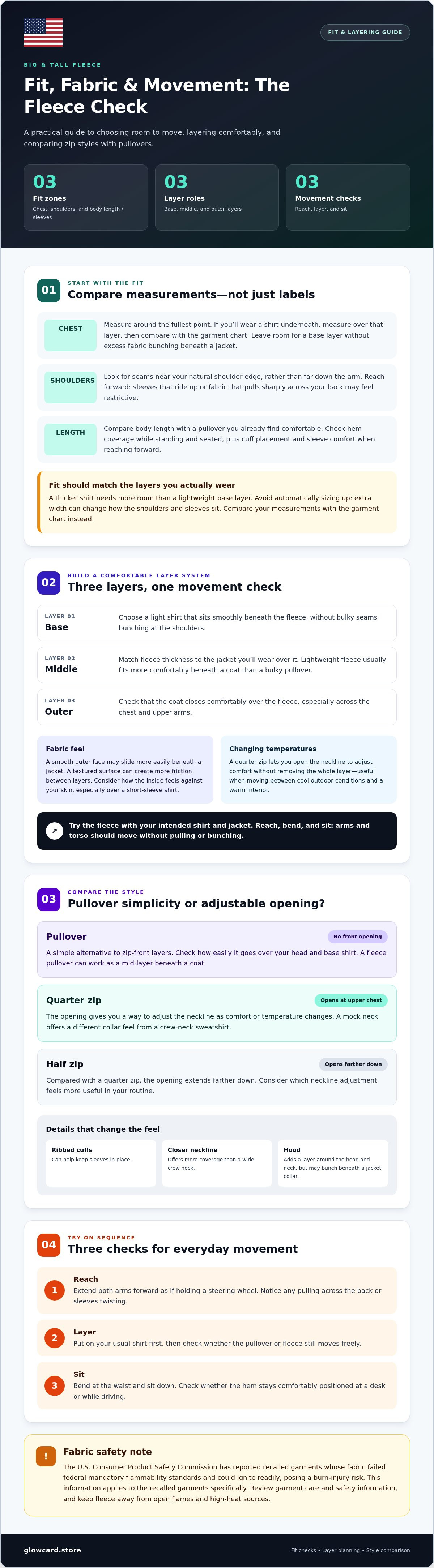
Extended sizing works best when you compare measurements, not just labels. A big and tall quarter zip fleece should allow comfortable movement through the chest, shoulders, and arms. Measure your chest around its fullest point, then compare it with the garment’s size chart. If you plan to wear a shirt underneath, measure over that layer. This gives you a more realistic fit reference than measuring over bare skin.
Length matters, too. Compare the garment’s body length with a pullover you already wear comfortably. For sleeve fit, check the shoulder seams and cuff placement. Sleeves that ride up when you reach forward may feel restrictive. Try everyday movements, such as reaching for a shelf or sitting at a desk. The fabric should not pull sharply across your back or bunch heavily at the waist.
Use these checks when comparing sizes:
- Chest: Choose room for a base layer without excess fabric bunching beneath a jacket.
- Shoulders: Look for seams that sit near your natural shoulder edge, rather than dropping far down the arm.
- Body and sleeves: Check hem coverage while standing and sleeve comfort while reaching forward.
Fit should support the way you plan to layer. A fleece worn over a thicker shirt needs more room than one worn directly over a lightweight base layer. Avoid automatically sizing up: extra width can change how the shoulders and sleeves sit. Instead, compare your measurements with the garment chart and consider the layers you’ll actually wear.
Fit isn’t the only detail to assess. The U.S. Consumer Product Safety Commission has reported recalled garments whose fabric failed federal mandatory flammability standards and could ignite readily, posing a burn-injury risk. This recall information applies to the recalled garments specifically. As a practical precaution, review garment care and safety information, and keep fleece away from open flames and high-heat sources.
Layering fabric features
Fleece can feel soft and insulating, but its thickness affects how easily it layers. Lightweight fleece usually fits more comfortably beneath a coat than a bulky pullover. Consider where you’ll wear it: fleece over a T-shirt may work indoors, while a base layer underneath can add comfort outdoors. Aim for a combination that feels warm enough without crowding your arms or torso.
Check the fabric’s surface and structure before choosing. A smooth outer face may slide more easily beneath a jacket, while a textured surface can create more friction between layers. Run your hand over the fabric and notice how it feels against your skin. If you’ll wear the fleece directly over a short-sleeve shirt, the inside feel matters more than it would over a long-sleeve base layer.
Consider airflow and changing temperatures, too. You may feel comfortable in a fleece during a walk, then warm up when you enter a heated building. A quarter zip lets you open the neckline to adjust comfort without removing the whole layer. That small adjustment can be useful on a commute between cool outdoor conditions and a warm interior.
Use these checks when planning your layers:
- Base layer: Choose a light shirt that sits smoothly beneath the fleece, without bulky seams bunching at the shoulders.
- Middle layer: Match fleece thickness to the jacket you’ll wear over it; test both together for easy arm movement.
- Outer layer: Check that the coat closes comfortably over the fleece, especially across the chest and upper arms.
Care can also affect the fabric’s feel. Follow the garment label’s washing and drying directions to help maintain its texture. Avoid piling on layers simply because the weather feels uncertain. Instead, try the fleece with your intended shirt and jacket, then move your arms and sit down. For a clothing option to compare with your layering plan, browse clothing for comfortable layering.
Men’s big and tall pullovers and sweatshirts
Pullovers and sweatshirts offer a simple alternative to zip-front layers. A pullover has no front opening, so check how easily it goes over your head and base shirt. A sweatshirt may feel familiar for relaxed wear, while a fleece pullover can work as a mid-layer beneath a coat. Compare the neckline, cuffs, and hem, since each affects how the garment sits during daily movement.
For a weekend outfit, try a pullover over a T-shirt with jeans. For a commute, test it beneath the jacket you actually wear. The shoulders should let you reach forward without the sleeves twisting. Check the hem while seated, too. If it rides up at a desk or while driving, a longer body may suit your routine better.
Design details shape how each style feels. Ribbed cuffs can help keep sleeves in place, while a closer neckline offers more coverage than a wide crew neck. A hood adds another layer around the head and neck, but may bunch beneath a jacket collar. Choose details for how you’ll use the garment, not just how it looks on a hanger.
Use this quick try-on sequence to compare two pullovers:
- Reach: Extend both arms forward, as if holding a steering wheel, and notice any pulling across the back.
- Layer: Put on your usual shirt first, then check whether the pullover still moves freely.
- Sit: Bend at the waist and sit down to see whether the hem stays comfortably positioned.
For a zip-front option, a mock neck changes the feel around the collar compared with a crew-neck sweatshirt. The 2023 Men's Plus Size Fleece Zip Mock Neck Sweater is one example of that design category. Its zip opening gives you another way to adjust the neckline, while the mock neck provides a distinct look from a standard pullover. Compare these features with your usual layers and preferred neckline before deciding which style suits your day.
Quarter-zips and half-zips
A quarter zip opens at the upper chest, while a half zip extends farther down. Both styles let you adjust the neckline without removing the fleece. For example, open the zipper indoors if a high collar feels warm, then close it outside. The shorter opening leaves more fabric at the front, while the longer opening offers a wider adjustment range.
Check the collar before choosing. A stand collar can sit close around the neck, so try it with a shirt collar underneath. If you wear a scarf, see whether the zipper and collar leave comfortable room. The zipper pull should move smoothly without catching nearby fabric. These details matter when moving repeatedly between outdoor and indoor settings.
Choose a zipper style that suits your routine. A quarter zip can work for a workday layer when you want a neat neckline and quick ventilation. A half zip may be easier to open over a shirt with a higher collar. Either style should lie flat when closed, without pulling at the chest or bunching beneath the chin.
- Zip it fully: Check whether the collar feels comfortable against your neck while standing and sitting.
- Open it partway: Notice whether the zipper rests smoothly or presses against a shirt collar.
- Reach forward: Make sure the front fabric stays comfortable while you move your arms.
A big and tall quarter zip fleece should work with your planned layers, not just look right on a hanger. Try it over the shirt you expect to wear most often. Then add your usual jacket and check that the collar does not bunch beneath it. With a half zip, test how the longer opening sits fully closed and partly open. These checks help you compare coverage, ventilation, and ease of wear.
Ready to compare clothing options for your preferred neckline and layering routine? Browse clothing styles for layering.
Glocard: 1080° Rotatable Faucet Extender - Splash-Free Kitchen & Bathroom Upgrade
Glocard’s 1080° Rotatable Faucet Extender - Splash-Free Kitchen & Bathroom Upgrade brings a practical adjustment to kitchen and bathroom routines. Its focus is a rotatable faucet extender for a splash-free upgrade. For readers comparing clothing after reviewing fleece fit, Glocard also offers the 2023 Men's Plus Size Fleece Zip Mock Neck Sweater. Its zip-front, mock-neck style provides a clothing option connected to this article’s topic.
Choose the faucet extender for a kitchen or bathroom fixture upgrade, or the fleece sweater if you’re looking for men’s plus-size fleece. Each product serves a different everyday need. Visit glocard.store to explore Glocard’s offerings.
Choose a Layer for the Life You Lead
Let your week guide your choice. Think about where you’ll wear a big and tall quarter zip fleece most: on a cool commute, indoors, or outside on a relaxed weekend. The setting helps you decide whether you want a standalone piece or a layer that works beneath outerwear. Choosing for your actual routine can make a garment easier to wear than shopping for one idealized outfit.
Before deciding, picture a few outfits already in your wardrobe. Consider the shirts, trousers, and outer layers you wear often, then choose a fleece that works with them. Decide what role it should play: a casual top, a warmer option for indoor wear, or an extra layer for travel. Knowing its role gives your search direction without making the choice complicated.
Ready to explore clothing options for your wardrobe? Browse clothing styles and find a comfortable next step for your everyday routine.
Frequently Asked Questions
What sizes are available in big and tall quarter zip fleeces?
Available sizes depend on the garment, so check its size chart rather than assuming every brand uses the same range. Compare the chart’s chest and body measurements with a fleece you already own. A familiar pullover, for example, can help you judge whether a listed size leaves room for your usual shirt. Check sleeve and body length, too, since they affect coverage and comfort.
What materials and warmth levels are available in quarter zip fleeces?
Materials and warmth vary by garment. Read the fabric content and care label to learn what a particular fleece contains, then consider how you’ll wear it. A lighter-feeling layer may suit indoor use or wear under a coat, while a thicker fleece may work better as an outer layer in cooler conditions. Try it with your planned outfit to assess comfort and bulk.
Where can I buy big and tall quarter zip fleece jackets?
Glocard offers the 2023 Men's Plus Size Fleece Zip Mock Neck Sweater as a zip-front layering option.
How do you wash and care for a fleece quarter zip?
Follow the garment label’s washing and drying directions to help maintain the fleece’s texture. Keep it away from open flames and high-heat sources.