


The faucet’s brand may be the least useful clue when choosing a faucet extender for bathroom sink use. Start with the outlet at the end of the faucet: its shape, any visible aerator, and the connector’s size and thread direction can determine whether an extender attaches.
Product listings often spotlight rotation or splash-related claims, while the details that matter for everyday use can be harder to compare. A useful way to shop is to describe the problem you want to solve, inspect your faucet and basin, then compare those observations with the product’s stated specifications.
This guide explains how an extender can change the water’s reach or direction, what to consider for basin space and daily handling, and why a rotating design is only one part of the decision. It also covers common fit assumptions, including why faucet brand alone isn’t enough. Glocard offers the 1080° Rotatable Faucet Extender - Splash-Free Kitchen & Bathroom Upgrade, which is positioned for kitchen and bathroom use. The steps below can help you assess how a faucet extender fits your needs and what information to compare with your setup.
Key Takeaways
- Start with the bathroom routine you want to make easier, then decide whether changing the water’s reach or direction could help.
- Compare adjustability and usable reach, not just a rotation number. A feature matters when it suits your basin and everyday use.
- For a faucet extender for bathroom sink use, compare the faucet-end shape and attachment method with the extender’s specifications instead of relying on faucet brand alone.
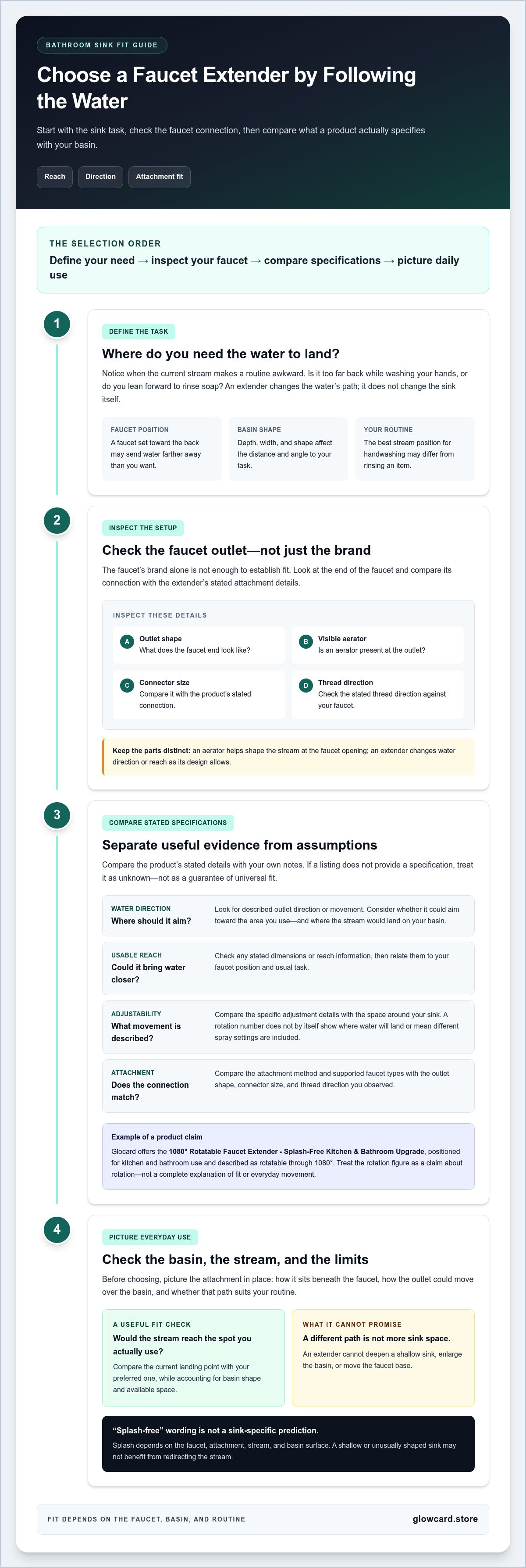
- Use a simple selection order: define your need, inspect your faucet, compare specifications, and picture how the extender would work day to day.
- Glocard offers the 1080° Rotatable Faucet Extender - Splash-Free Kitchen & Bathroom Upgrade, which is positioned for kitchen and bathroom use and described as rotatable through 1080°.
When Can a Faucet Extender Improve a Bathroom Sink Routine?
A faucet extender is an attachment designed to change where water flows within the sink area. Depending on its design and how it fits the faucet, it may bring the stream closer or let you direct it toward a different part of the basin. It changes the water’s path rather than the sink itself, so its usefulness depends on your faucet, basin, and routine.
Which bathroom sink routines might benefit from an extender?
Think about the moments when you reach for water. If the stream lands too far back while you wash your hands, or you have to lean forward to rinse soap, bringing the water closer to the basin’s center may make that task more convenient. A faucet set far back or a broad basin can create a noticeable gap between the outlet and where you need the water. In a shallow or unusually shaped sink, redirecting the stream may not improve the experience.
Three details help you decide whether changing the water’s path could be useful:
- Faucet position: A faucet set toward the back of the sink may send water to a spot that feels too far away.
- Basin depth and shape: A deep basin, shallow bowl, or wide rectangular sink creates different distances and angles between the outlet and the task.
- Your routine: The ideal stream location for washing your hands may not be the most useful spot for rinsing an item.
These are practical considerations, not a promise that an extender will suit every bathroom. An attachment can change where water lands without making the stream gentler. Splash depends on factors such as the faucet, the attachment, the stream, and the basin surface, so a “splash-free” phrase alone can’t predict the result at your sink.
What a faucet extender can and cannot change
An extender changes water direction or reach only as its design allows. A fixed shape may guide the stream one way, while an adjustable design may offer more flexibility. The word “rotatable” signals movement, but it doesn’t tell you where the water will land on your particular sink. The outlet and attachment still need to work with the faucet and the available basin space.
A faucet aerator is another outlet component, but it isn’t necessarily an extender. An aerator helps shape the stream at the faucet opening. For background on its role, see Understanding Faucet Aerators. Keeping the distinction clear helps you focus on the change you actually want: stream quality, direction, or reach.
A faucet attachment changes the water’s path; a faucet replacement changes the fixture itself. An extender can’t increase basin size, deepen a shallow sink, or move the faucet’s base. If the main issue is limited room inside the bowl, a new direction may help with one task, but it won’t create more sink space. Before considering a faucet extender for bathroom sink use, note where the stream currently lands and where you’d prefer it to reach. That comparison gives you a specific goal to use when reviewing product features.
Which Bathroom Faucet Extender Features Are Worth Comparing?
Useful comparisons focus on what the attachment is stated to do and whether that change suits your sink. Look for details about water direction, usable reach, adjustability, dimensions, and the attachment method. A feature is helpful only if it fits the faucet and makes sense for your bathroom routine. Judge each feature against your sink setup, rather than treating a product claim as a fit guarantee.
How to judge rotation and water direction claims
A rotation number describes an advertised range, not necessarily the positions you can comfortably use over your basin. The faucet shape, attachment design, and space around the sink may affect how far the outlet can move in practice. Don’t assume a number means the stream reaches every corner or that the product includes different spray settings. Those are separate details to look for in the listing.
If a product name highlights 1080° rotation, treat that as a rotation claim rather than a complete explanation of everyday movement. For more context, see what a 1080-degree faucet extender rotation means. Then compare the described movement with your basin’s shape and the place where you’d like the water to land.
Which listing details help assess bathroom use?
Prioritize stated specifications over broad benefit language. Dimensions help you picture how an attachment may sit beneath the faucet. Attachment details and supported faucet types help you assess whether its connection matches your fixture. Compare each detail with your bathroom setup, and treat any specification the listing doesn’t provide as unknown rather than assuming a universal fit.
This comparison separates useful evidence from questions you still need to answer:
| Feature | Listing evidence | Bathroom relevance | Unanswered detail |
|---|---|---|---|
| Water direction | Described outlet direction or movement | Does it aim toward the area you use? | Where does the stream land on your basin? |
| Usable reach | Stated dimensions or reach information | Could it bring water closer to your usual task? | How does that reach relate to your faucet position? |
| Adjustability | Specific movement or adjustment details | Could you direct the stream as needed? | Which positions are practical at your sink? |
| Attachment | Connection method and supported faucet types | Does the listing address your faucet style? | Are the relevant dimensions and connection details stated? |
Use the table to compare evidence, not to fill gaps with assumptions. A rotation figure alone doesn’t establish compatibility, reach, or comfort in daily use. For a faucet extender for bathroom sink use, prioritize the specifications that answer your practical questions. For example, if you want to bring water closer, look for stated reach or dimensions; if your concern is fit, focus on the connection method and supported faucet types. This approach makes products easier to compare, even when their descriptions use similar feature language.
How Do You Compare Bathroom Faucet Extenders Without Assuming They Fit?
A product photo can make two faucet outlets look nearly identical, but appearance alone doesn’t establish that an attachment will connect. Compare the faucet’s outlet and visible attachment point with the specifications in the listing. Look for documented overlap between the two, rather than guessing from a familiar shape or a broad compatibility phrase.
What faucet details should shoppers compare?
Start by looking at the outlet at the end of your faucet. Note its visible shape and whether an aerator or other fitting is present. Then compare what you see with the listing’s supported faucet types, connection details, and any stated measurements. If a key detail is missing, leave it unanswered. Faucet brand, finish, or appearance alone can’t establish thread size, connection style, or compatibility.
Use this checklist to record what you can see and what the listing actually states:
- Faucet outlet: Note its visible shape and whether a fitting is present at the end.
- Attachment point: Compare the faucet connection with the extender’s stated attachment method.
- Measurements: Look for dimensions or connector measurements that can be compared directly.
- Supported faucet types: Check whether the listing names faucet styles or outlet types that match yours.
- Open questions: Mark unstated details as unknown instead of filling gaps with assumptions.
Faucet-end shape and attachment method both matter. A fixture may look close to a product photo yet have a different outlet or connection. A listing that describes an attachment without naming supported faucet types or measurements may not give enough information to establish fit. For broader feature evaluation alongside fit details, use the rotatable faucet extender buying comparison.
How should you read universal-fit language?
Read “universal” as broad wording, not as a measurement or a complete compatibility list. Look for details that explain what the term covers, such as specified outlet types, connection method, or dimensions. Keep confirmed specifications separate from expectations based on a product photo, title, or another buyer’s faucet. A claim without supporting fit details doesn’t tell you exactly how the product relates to your fixture.
For a faucet extender for bathroom sink use, compare each documented specification with your own faucet before treating a listing as a match. If the listing names a connection type and your faucet details correspond, that gives you clearer evidence than a universal label by itself. If information is absent, don’t turn the gap into a compatibility claim. Record it as an unanswered detail and use the other available specifications to make your comparison.
How Can You Match an Extender to Your Bathroom Sink?
A practical choice starts with your sink, not a product headline. Use these four steps to connect the task you want to make easier with the faucet details and product specifications that can support a sensible comparison.
A four-step bathroom sink selection process
- Define the need. Name the specific inconvenience, such as wanting water to reach nearer the basin’s center while you wash your hands. A clear task makes it easier to judge whether a listed feature is relevant.
- Inspect the faucet and basin. Note the faucet outlet and position, along with the basin’s shape and available space. These observations give you a practical reference when reviewing products.
- Compare stated specifications. Look for dimensions, attachment details, supported faucet types, and descriptions of water direction or adjustability. Match documented information to your observations, and don’t fill missing details with guesses.
- Assess daily use. Consider whether the described reach or movement would help with your routine and leave enough usable room around the sink. A feature that sounds appealing may not be convenient in your layout.
For example, if you want to direct water toward the middle of the basin, a listing that specifically describes adjustable water direction addresses that need more directly than one that only highlights rotation. A product name that says “1080° rotatable” signals a rotation claim, but doesn’t establish where the stream can practically reach on your faucet. Compare the feature description with the basin layout, then assess fit separately.
Before choosing a faucet extender for bathroom sink use, compare the product’s stated fit details and dimensions with your faucet and sink. If a specification isn’t stated, treat compatibility or reach as unknown instead of assuming the attachment will suit your setup.
Common shopping mistakes to avoid
- Choosing by rotation number alone: A stated range doesn’t tell you which positions are usable at your sink or whether the attachment fits your faucet.
- Assuming use labels mean universal fit: A product described for kitchen and bathroom use isn’t automatically compatible with every faucet in either room. Compare its stated connection details with your faucet.
- Treating a splash-related phrase as a guarantee: A product claim doesn’t establish the result at your basin. Faucet shape, water direction, attachment fit, and sink layout all affect everyday use.
Keep the decision grounded in evidence: define the task, note what you can observe, compare the listing’s actual specifications, and picture the attachment in your daily routine. That method helps separate a promising feature from a proven fit, so your choice is based on the bathroom sink you have rather than assumptions.
Is Glocard’s Faucet Extender a Relevant Option for Your Bathroom?
Glocard offers the 1080° Rotatable Faucet Extender - Splash-Free Kitchen & Bathroom Upgrade. Its name positions it for kitchen and bathroom use and describes 1080° rotation. It is an option to consider if you’re looking for a bathroom attachment with a rotation claim. To judge whether it suits your sink, compare the product’s stated fit and dimensions with your faucet and basin.
What the listed Glocard product name tells shoppers
The name provides two reference points: kitchen and bathroom positioning, and stated 1080° rotation. It also uses the phrase “Splash-Free,” which is part of the product name, not a guarantee of the result in every sink setup. The name doesn’t establish dimensions, materials, installation method, or universal faucet compatibility.
Use the product details to assess fit. Compare the stated connection information and measurements with what you’ve noted about your faucet, and distinguish listed specifications from assumptions. A rotation description doesn’t replace those checks. Glocard’s faucet extender is designed for consideration as a bathroom option, while your own faucet and sink layout determine which fit and use details matter.
A simple final decision check
Before choosing a faucet extender for bathroom sink use, identify what you want to change, such as where the water reaches during a routine task. Then compare the faucet’s visible outlet and attachment point with the product’s stated fit details. Check dimensions against your sink layout as well, so the described reach or movement has a practical context.
- Use case: Is the bathroom task you want to improve clear?
- Faucet: Have you noted the outlet and visible attachment point?
- Product details: Do the stated fit information and dimensions match what you observed?
- Expectations: Are you relying on specifications rather than assuming the rotation or splash-related wording guarantees a result?
Keep your decision anchored to the bathroom task and the available product specifications. For a separate category, you can also browse Glocard’s pet supplies collection.
Make Your Next Sink Upgrade a Considered Choice
Let your bathroom routine guide the final decision. Before choosing a faucet extender for bathroom sink use, compare the product details with your faucet and the space in your basin. That small pause helps keep an appealing product name from standing in for the fit information you need.
Glocard offers the 1080° Rotatable Faucet Extender - Splash-Free Kitchen & Bathroom Upgrade, positioned for kitchen and bathroom use. Review its stated details against your sink setup rather than relying on the name alone. For a separate category, you can browse Glocard’s pet supplies collection.
Use the selection steps in this guide to decide whether the faucet extender matches your routine, faucet, and basin. When you’re ready, explore Glocard’s 1080° Rotatable Faucet Extender - Splash-Free Kitchen & Bathroom Upgrade.
Frequently Asked Questions
Will a faucet extender fit every bathroom sink faucet?
No. Fit depends on the connection at the faucet outlet and the extender’s stated compatibility details. Before choosing a faucet extender for bathroom sink use, compare the listing with what you can identify on your faucet, including any specified measurements or supported faucet types. A “universal” label doesn’t establish that every outlet is covered. Appearance or brand familiarity alone isn’t proof of fit.
Can a faucet extender reduce splashing in a bathroom sink?
It may change where water lands, but that doesn’t guarantee less splashing. Directing water toward a basin’s center could produce a different result from aiming it near a sloped side or drain. The faucet, water flow, basin shape, and attachment design all affect the outcome. Treat splash-related wording as a product claim, not a promise for your sink. Consider where the stream will meet the basin before deciding whether the feature addresses your concern.
What should I measure before buying a bathroom faucet extender?
First identify the faucet outlet and attachment point, then compare them with measurements the product listing actually provides. Listings don’t all give the same dimensions, so don’t invent a measurement target or assume an unlisted size. Also note where the faucet sits relative to the basin. For instance, an attachment’s stated length may be relevant if you’re trying to bring water forward, while the basin layout helps you judge whether that reach would be useful.
Does a 1080-degree faucet extender rotate through a full circle?
1080 degrees equals three full 360-degree turns as a measurement, but a product’s rotation figure doesn’t explain how its parts move in practice. It may describe a combined range across moving sections rather than one continuous turn at the outlet. Check the product description for how movement is achieved, and consider whether the stated positions suit your faucet and basin. Don’t infer a particular path or usable reach from the number alone.
Are bathroom faucet extenders different from kitchen faucet extenders?
Some extenders are described for one setting, while others are positioned for both kitchen and bathroom use. The label tells you about the intended setting, not necessarily whether the connector suits your faucet. A bathroom listing still needs to address the outlet or attachment details relevant to your fixture. Match the stated use and fit information to your task, rather than choosing by room label alone.
Can a faucet extender change water pressure?
It can affect how water exits or is directed, depending on the attachment and faucet, but don’t assume it will increase pressure. A change in how the stream looks or lands isn’t proof that the faucet’s pressure has risen. Look for explicit water-flow information in the product description and compare it with your goal. If pressure is the main concern, direction or reach claims alone won’t answer it.
Is a faucet extender the same as a faucet aerator?
Not necessarily. An aerator is fitted at the faucet outlet and helps shape the water stream. An extender is generally described by its role in changing the water’s reach or direction. Some product names use these terms loosely, so focus on the attachment’s stated construction and intended function. If a listing calls an item both, look for details explaining what it does rather than assuming the terms describe interchangeable parts.


